Key Findings
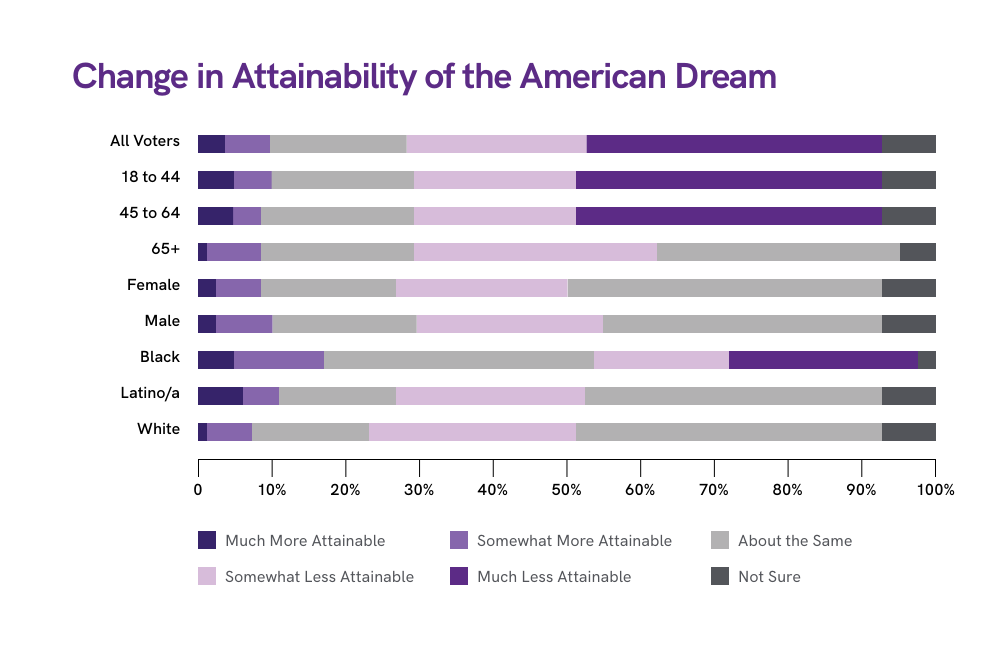
American voters believe that the American Dream has become less attainable, with 66% saying the American Dream has become less attainable.
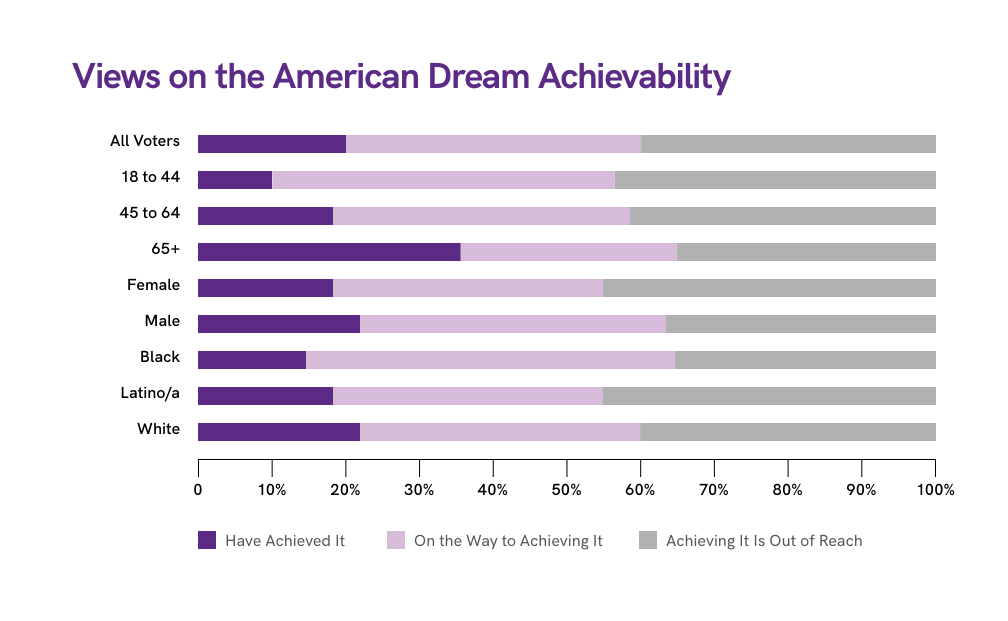
Only 20% of Americans voters believe they have achieved the American Dream, and only 26% believe their family has. Forty percent of American voters say the American Dream is out of reach, with young people most likely to agree (43%).
The aspects of the American Dream that people believe have become less attainable are owning a home, not having to pay too much in taxes and providing a better life for future generations.
Fifty-seven percent of Americans agree that America is a place people can expect a fair shake, 35% disagree. Fifty-six percent agree there is equal opportunity for all, 38% disagree.
Methodology
Rainey Center fielded an online survey of 1,010 respondents over web panels from July 14-15, 2024 and weighted it to education, gender, race, survey engagement, and 2020 election results. The margin of error is +/- 4.0.
Achieving the Dream
Forty percent of American voters say the American Dream is out of reach for themselves, 40% say they are on the way to achieving it, and 20% have achieved it. The numbers are similar for families, though Americans are somewhat more optimistic for their families, with 35% reporting that the American Dream is out of reach for their families, 39% say they are on their way to achieving it and 35% say it is out of reach.
Attainability of the American Dream
Overall, 40% of American voters say the American Dream has become “much less attainable” over the last 10 years, while another 26% say it has become “somewhat less attainable.” Only 9% think it has become more attainable (3% “much more,” 6% “somewhat more”). Latinos are and whites are more likely than black voters to say the American Dream is much less attainable now (39% Latinos, 43% of whites), compared to 23% of African Americans who say the same. Women (43%) are more likely than men (36%) to say the American Dream has become “much less” attainable. Republicans (46%) are more likely than Democrats (37%) to say the Dream has become “much less” attainable.
Important Aspects of the American Dream
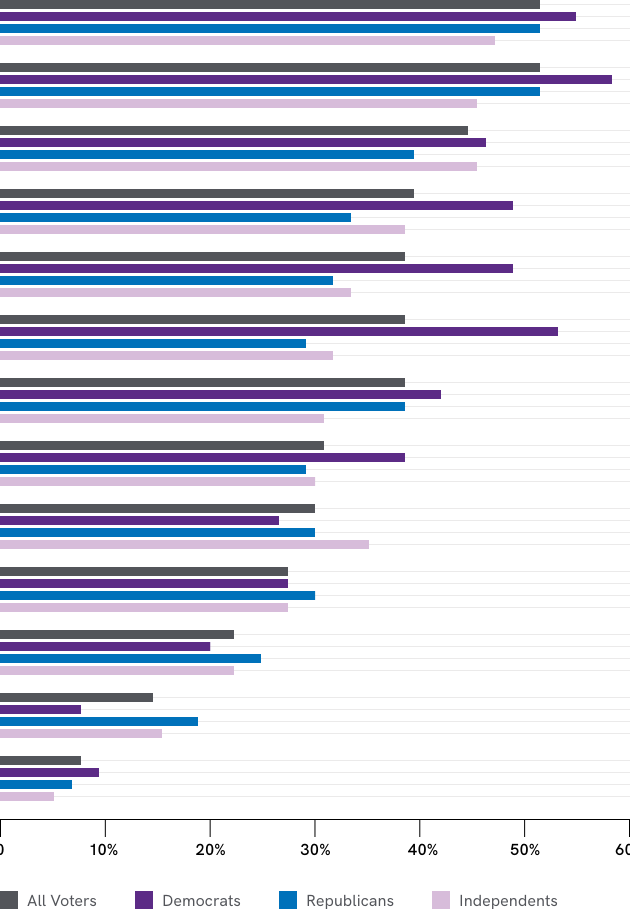
When asked about the most important aspects of the American dream, experiencing freedom and individual rights tops the list, rated as most important by 52% of Americans. This is followed by achieving financial stability and security (44%) and providing a better life for future generations (40%). Living in a democracy where you can express your opinions freely is especially valued by older Americans (56% of 65+ rate it most important vs. 41% of 18-44 year olds). It is also prioritized more by whites (55%) than African Americans (43%) or Latinos (42%). Younger people put greater importance on pursuing personal and professional goals (37% of 18-44 year olds vs. 22% of 65+). African Americans are most likely to highly value providing a better life for the next generation (47% most important, compared with 37% of Latinos and 38% of whites).
Democrats most prioritize healthcare access (53% to 28%) relative to Republicans, while Republicans most prioritize not having too many regulations on business (19% to 8%) relative to Democrats. On the top three issues (freedom and individuals, living in a democracy and financial stability) there were very little partisan differences.
What Aspects of the American Dream are Becoming More Attainable
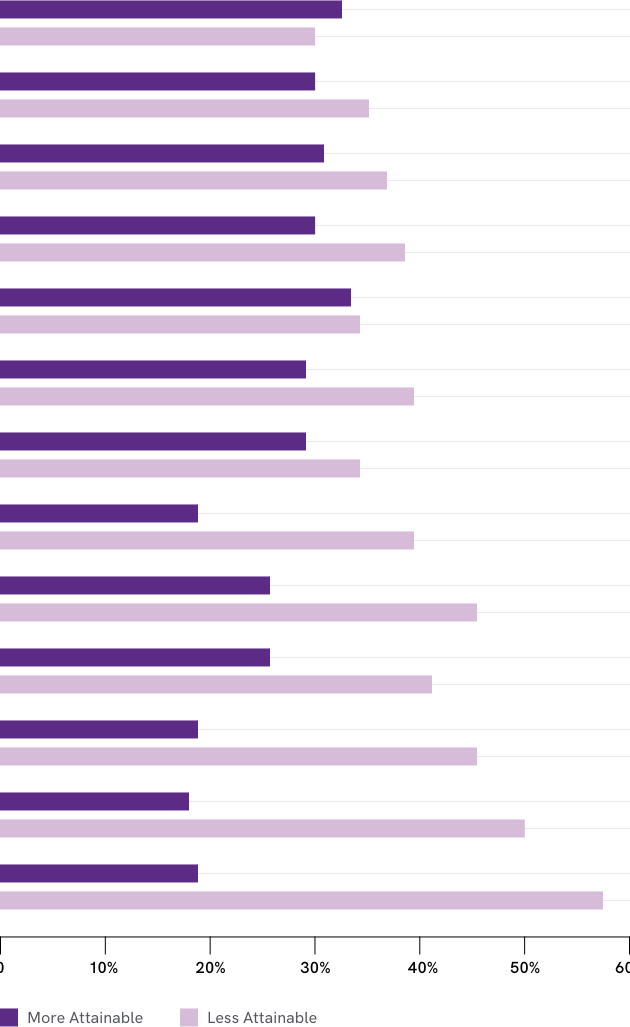
Our survey finds that voters have a generally pessimistic view of how the American Dream’s attainability has shifted over the last 10 years. Most aspects are perceived as less attainable, with home ownership showing the most negative trend (57% less attainable, 19% more attainable). Financial aspects like stability and security (46% less, 26% more) and low taxes (46% less, 19% more) are also seen as significantly less attainable. More abstract concepts like equal opportunities (31% less, 34% more) and pursuing personal and professional goals (35% less, 30% more) show a more balanced, though still slightly negative, perception. The ability to provide for future generations (42% less, 26% more) and access to healthcare (38% less, 29% more) are also viewed more negatively. Interestingly, while being a millionaire is seen as one of the least attainable aspects (50% less, 17% more), it’s also considered one of the least important elements of the American Dream.
Is the American Dream Real or a Myth?
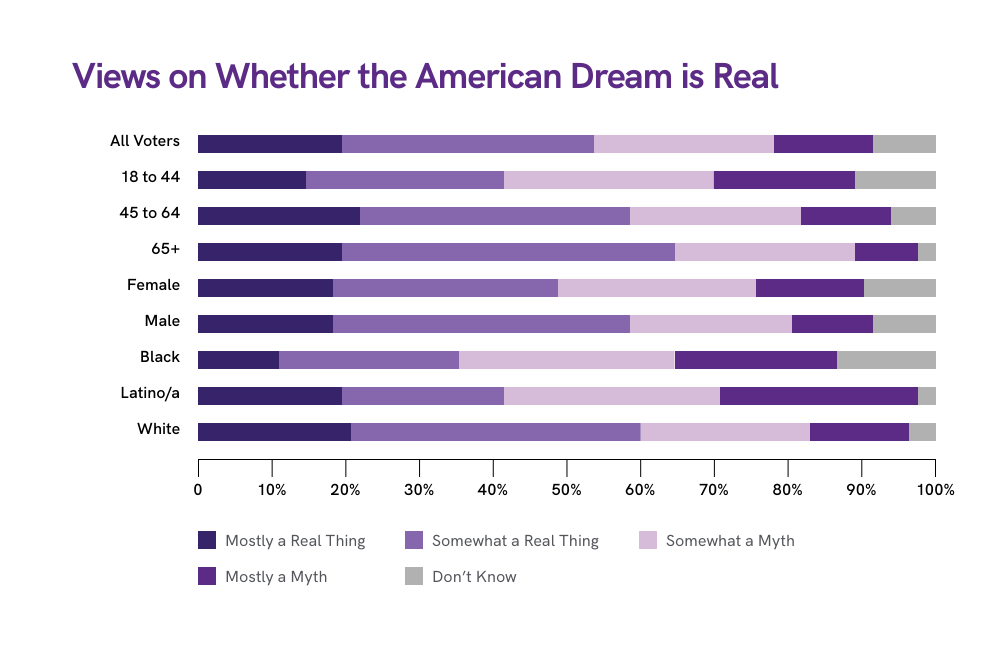
Americans are split on whether the American Dream is real or a myth. Fifty-four percent say it is mostly or somewhat real, while 39% say it is mostly or somewhat a myth. Older Americans are more likely to consider it real (67% of 65+ compared to 41% of 18-44 year olds). A majority of whites (60%) believe the Dream is real vs. 47% of Latinos and just 35% of African Americans. Women are slightly more skeptical, with 42% considering it a myth compared to 36% of men.
Can People Get a Fair Shake in America?
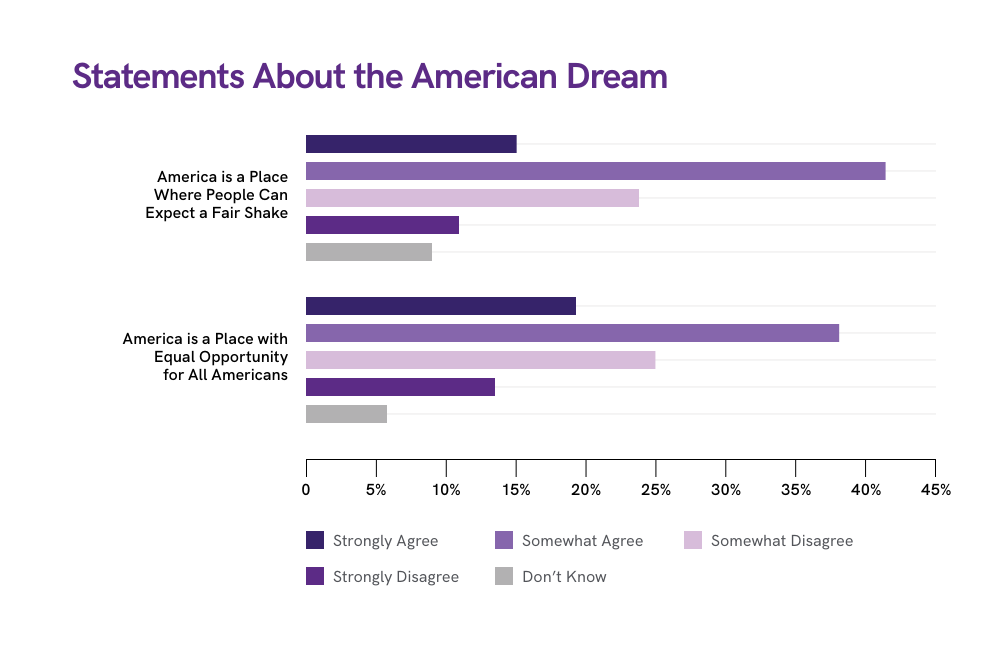
Fifty-seven percent of voters agree America is a place people can expect a fair shake, 35% disagree. Older Americans are more likely to agree (68% agree) than young Americans (45% agree). White voters (61% agree) are more likely to agree than black voters (47%) and Latinos (48%).
Fifty-six percent of Americans agree there is equal opportunity for all, 38% disagree. Young voters (47% agree) are and Democrats (53%) are more skeptical of fairness and equal opportunity. Older voters (62% agree) and Republicans (69%) are more likely to agree America is a land of equal opportunity. Black voters (42%) and are less likely than white voters (60%) and Latinos (54%) to agree there is equal opportunity.
What Defines America for You?
Freedom tops the list at 64%, followed by opportunity (38%) and equality (20%). Republicans are more likely than Democrats to say freedom (76% of Republicans, 54% of Democrats) and family (26% of Republicans, 18% of Democrats) define America. Democrats are more likely to cite equality (28% of Democrats, 11% of Republicans).
Conclusion
There are universal aspirations of the American that cut across all demographics. Financial stability, home ownership, and achieving personal and professional goals are consistently identified as crucial components of the American Dream, but American voters see all of these as becoming less attainable over the last ten years.