
Key findings
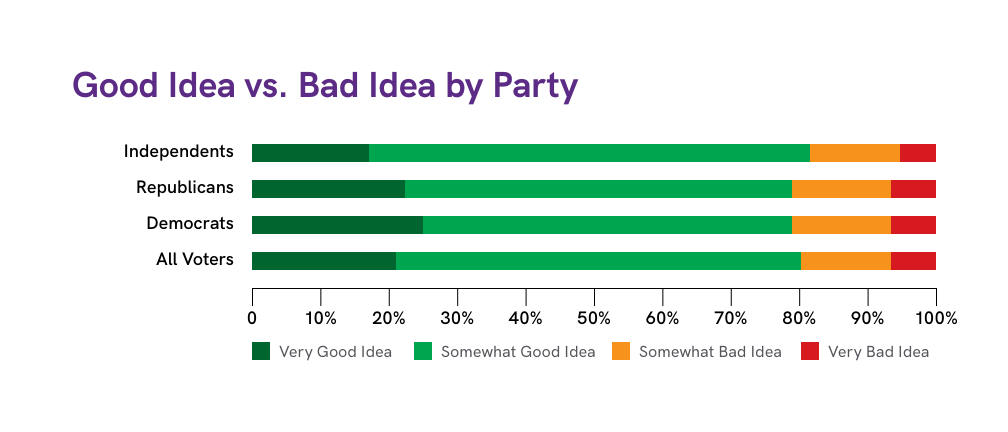
- Eighty percent of voters say that carefully adding naturally occurring minerals to help ocean waters address carbon pollution sounds like a good idea (21% very good idea, 59% somewhat good idea).
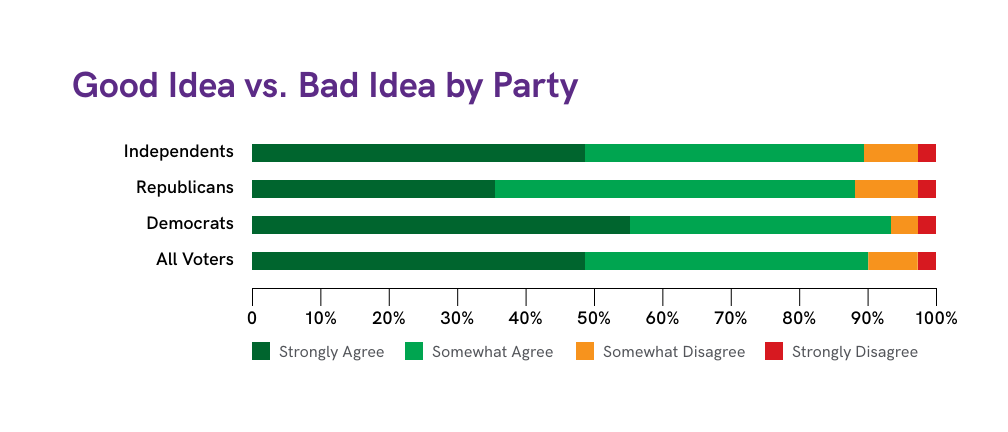
- When asked whether the United States should explore additional ways to protect ocean health and address carbon pollution, as long as they are tested and safe, 89% of voters agree (46% strongly agree, 43% somewhat agree).
- Only 45% of voters were aware that mineral weathering naturally helps counteract ocean acidification (15% very aware, 30% somewhat aware).
- Ocean-based carbon solutions enjoy genuinely bipartisan support, with Republicans and Democrats within a few points of each other
Strong Bipartisan Support for Ocean Health and Carbon Removal
Climate policy has long been a partisan flashpoint, but new polling reveals a promising area of consensus: Americans across the political spectrum support exploring ocean-based solutions to address carbon pollution.
When informed that naturally occurring processes already help counteract carbon pollution and potentially reduce coastal acidification, voters overwhelmingly support the idea of carefully accelerating this process. Eighty percent of voters say adding naturally occurring minerals to help oceans address carbon pollution sounds like a good idea, including 79% of Republicans, 79% of Democrats, and 82% of Independents.
Even more striking: nearly nine in ten voters (89%) agree the United States should explore additional ways to protect ocean health and address carbon pollution, as long as the approaches are tested and safe. This includes 88% of Republicans, 93% of Democrats, and 89% of Independents.
These findings suggest that ocean alkalinity enhancement and similar marine carbon dioxide removal approaches may represent a rare opportunity for bipartisan climate action, one that emphasizes innovation, safety testing, and environmental stewardship rather than the divisive debates that have stymied other climate policies.
This poll surveyed 1,299 registered voters via online panel from January 28-29, 2026. Results were weighted by gender, age, race, and education to match population demographics. The margin of error is +/-3.1 percentage points at the 95% confidence level.
Ocean Mineral Enhancement
Eighty percent of voters say that carefully adding naturally occurring minerals to help ocean waters address carbon pollution sounds like a good idea (21% very good idea, 59% somewhat good idea). Only 20% say it sounds like a bad idea.
Support by Party
- Democrats: 79% good idea (25% very, 54% somewhat)
- Republicans: 79% good idea (22% very, 57% somewhat)
- Independents: 82% good idea (17% very, 65% somewhat)
Exploring Ocean Health Solutions
When asked whether the United States should explore additional ways to protect ocean health and address carbon pollution, as long as they are tested and safe, 89% of voters agree (46% strongly agree, 43% somewhat agree). Only 11% disagree.
Support by Party
- Democrats: 93% agree (55% strongly, 38% somewhat)
- Republicans: 88% agree (36% strongly, 52% somewhat)
- Independents: 89% agree (48% strongly, 41% somewhat)
Limited Awareness of Natural Processes
While support for ocean-based carbon solutions is high, awareness of the underlying natural processes is more limited. Only 45% of voters were aware that mineral weathering naturally helps counteract ocean acidification (15% very aware, 30% somewhat aware), while 55% were not very aware or not at all aware.
This suggests an education opportunity: as voters learn more about how these natural processes work, support for carefully enhancing them may grow even stronger.
Implications
These findings point to a potential path forward on climate policy that avoids the partisan gridlock that has stalled other approaches:
- Ocean-based carbon solutions enjoy genuinely bipartisan support, with Republicans and Democrats within a few points of each other
- The “tested and safe” framing resonates broadly, suggesting voters want innovation paired with responsible oversight
- Education about natural processes may further increase support, as awareness of natural mineral weathering is currently limited
- Older voters, who typically show more skepticism toward climate policies, are among the strongest supporters of exploring ocean health solutions
Policymakers looking for common ground on climate should take note: protecting ocean health through innovative, science-based approaches may offer a rare opportunity for bipartisan action.