Key findings
- There are more than half a million elected offices in the United States—519,682 to be precise, or at least as precise as we can be.
- That works out to one office for every 639 Americans, a staggering number.
- This was largely set off by the backlash against the notorious butterfly ballots (a kind of punch-card device) in Florida during the 2000 election.
- And though conspiracy theories about deliberate tampering (mostly on the left regarding the 2004 election) proved baseless, such a system is genuinely undesirable for a number of practical reasons.
- Today, almost all states required a 100% auditable paper ballot trail.
Executive summary
Across the country, there is a growing sense of frustration as election night drags on into election week, and beyond. In too many states, the simple task of counting votes is proceeding at a glacial pace. Some states have near-instant results within hours. Others take weeks, fueling distrust, conspiracy theories, and recriminations. But it doesn’t have to be this way. Regardless of other variations in state election procedures, every state can adopt best practices to ensure a reasonably quick, accurate, and confidence-inspiring vote count. We know it can be done, because many states already do it. This paper outlines five principles on best practices for policymakers to consider. All of these policies are already in use in at least some states, a mix of red and blue states, and in some cases, a majority of the states. Also addressed are some common misconceptions and erroneous ideas that have arisen on both sides of the aisle. Better, faster vote counting need not be a partisan issue. All of these recommendations can be achieved on a bipartisan basis. With legislators working in good faith, it is possible to address concerns about both election integrity and voter suppression in a fair, unbiased manner. Simply getting the votes counted in a timely manner is a good place to start.
Across the country, there is a growing sense of frustration as election night drags on into election week, and beyond. In too many states, the simple task of counting votes is proceeding at a glacial pace. Some states have near-instant results within hours. Others take weeks, fueling distrust, conspiracy theories, and recriminations. But it doesn’t have to be this way. Regardless of other variations in state election procedures, every state can adopt best practices to ensure a reasonably quick, accurate, and confidence-inspiring vote count. We know it can be done, because many states already do it.
This paper outlines five principles on best practices for policymakers to consider. All of these policies are already in use in at least some states, a mix of red and blue states, and in some cases, a majority of the states. Also addressed are some common misconceptions and erroneous ideas that have arisen on both sides of the aisle. Better, faster vote counting need not be a partisan issue. All of these recommendations can be achieved on a bipartisan basis. With legislators working in good faith, it is possible to address concerns about both election integrity and voter suppression in a fair, unbiased manner. Simply getting the votes counted in a timely manner is a good place to start.
Introduction
Democracy in America
At first glance, it seems most of the world doesn’t have this problem. Recent elections outside the United States—such as in the United Kingdom and France— highlight how many countries seem to quickly canvass the votes cast, report initial returns on election night, and have final results certified usually within a matter of days. Political nerds might be familiar with the charming tradition in the United Kingdom, for example, where all of the candidates for each parliamentary seat gather on election night to hear the tallies announced and a winner declared by the local returning officer.
This is accomplished even though many of these nations count ballots by hand. Some, such as France, do not even use government-printed ballots at all, with voters instead selecting a ballot prepared by their preferred political party. Such ballots resemble a promotional flier more than a piece of official paperwork.
Despite these seemingly primitive technological choices, the votes are counted quickly, even in a nationwide election such as for president.
This leads to a common question: if they can do it, why can’t we? The answer, simply put, is that Americans are addicted to elections. We elect many more offices, and put many more referendum questions to the voters, than any comparable peer democracy.
There are more than half a million elected offices in the United States—519,682 to be precise, or at least as precise as we can be. That works out to one office for every 639 Americans, a staggering number. Americans elect a dizzying array of offices from president to governor to a variety of other statewide executive offices; usually at least two and sometimes more members of the state legislature; legislators and executives at both the county and municipal level; school boards and state university regents; special purpose districts for fire, water, and mosquito control; county coroners and township auditors; and most judges from local traffic court to state supreme court justices. On top of this cornucopia of politicians is an endless stream of bond questions, ballot initiatives, advisory referenda, state constitutional amendments, and other forms of direct democracy.
No other nation comes anywhere close to having this many elections. As a consequence, American ballots are by far the most crowded in the world. A typical voter will face one or two dozen items on their ballot, sometimes more. Contrast this with a general election in the United Kingdom, which features a grand total of one office: your local member of Parliament. Sometimes elections for executive and legislative offices will be held concurrently, or for national and local legislators at the same time, but more often they are not. Even under such circumstances, the number of races rarely exceeds three or four.
This American civic tradition is firmly entrenched on a constitutional level in most states. Some political scientists have been dubious about the merits of this electoral proliferation, arguing it only causes voter confusion and a diffusion of democratic accountability. While that may be the case, a meaningful reduction in the number of elected offices is unlikely. Even the most aggressive consolidation would likely be unpopular and still leave voters with a bare minimum of around a dozen federal, state, and local officials to choose.
Rise of the Machines
For election administrators, the consequence for ballot design and the process of counting votes is stark. It simply is not physically possible, within reasonable time and resource constraints, to count votes by hand. As charming as the British tradition may be, it is not feasible within the constraints of the American system of government. Nor is the French system of DIY ballots. Machine counting of one sort or another is unavoidable.
This is why some of the first voting machines, which were among the important earliest predecessors of modern computers, were developed and used in the United States. It’s a bit fanciful, but one can draw a tenable chain of historical influence from America’s uniquely large number of elected offices to why we have Silicon Valley today. For most of that history, vote-counting machines (or “adding machines”) meant using some variation on punching holes in paper, out of which grew the punch cards famously used by early computers.
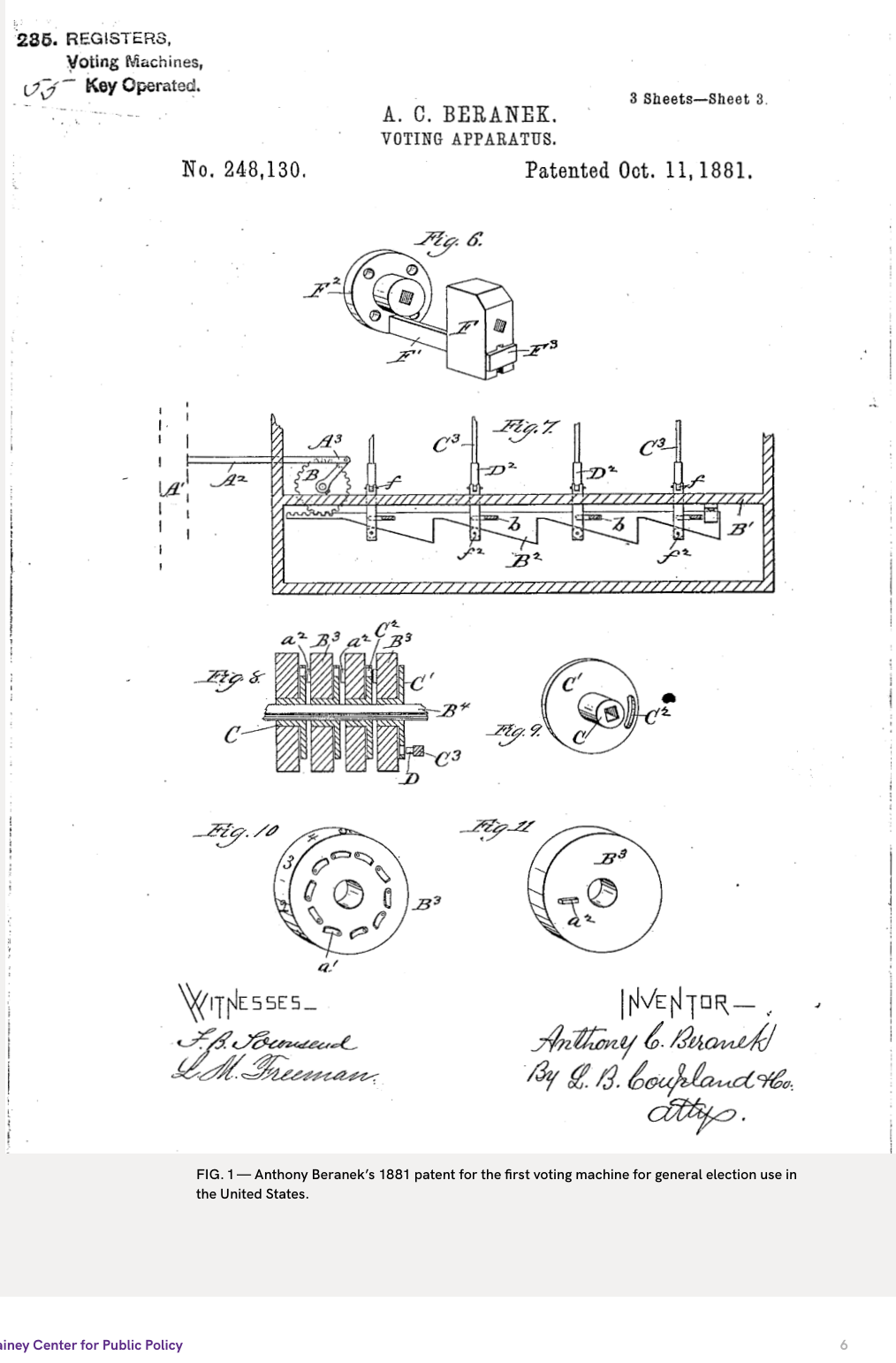
Over the past two decades, the technologies used for this purpose have iterated rapidly. This was largely set off by the backlash against the notorious butterfly ballots (a kind of punch-card device) in Florida during the 2000 election. Hanging chads were no longer acceptable.
Initially, many states pivoted to so-called direct recording electronic (DRE) voting machines. These are the touchscreen terminals that directly record a vote, leaving no paper trail and nothing to verify or recount. This proved unsatisfactory and unpopular. And though conspiracy theories about deliberate tampering (mostly on the left regarding the 2004 election) proved baseless, such a system is genuinely undesirable for a number of practical reasons. Even the touchscreens themselves have proven finicky and are prone to malfunction or misalignment, and the lack of an auditable paper trail become a rallying cry for reform.
Today, almost all states required a 100% auditable paper ballot trail. This has taken the form of two basic options: ballot-marking devices and optical scan paper ballots. By far, the most popular has been the optical scan paper ballots, which are used by most voters across the country. These ballots resemble Scantron tests most Americans are familiar with from school, and are used in every state for postal voting.
The main alternative, a ballot marking device, uses an electronic terminal (typically an ATM-style touchscreen) but also prints a paper ballot to be verified by the voter and kept for possible audits and recounts. Such machines have been found useful in high-traffic, high-population polling places, and are a reasonable option primarily for urban jurisdictions.
Both of these voting methods operate at the same high level of security: every individual vote is recorded on physical paper as confirmed by the voter. Both use machines to produce an initial count, and they do so more accurately and much more quickly than could be done by hand. And both methods can be subjected to the highest standard: manual verification during recounts and audits.
Done right, election results using these methods should be nearly instant, with numbers verified and reported by each polling place within hours. In this system, in-person votes are for the most part actually counted as they are cast, and all that’s needed afterwards is to count any other remaining votes (such as those sent in by mail) and add up the totals from the machines.
Unfortunately, it is not so simple, for a number of reasons: how absentee and postal votes are counted, the type of ballot security measures used, the handling of provisional ballots, the state’s voter registration system, and the resources available to election administrators. With the wrong policy, each of these factors can add substantial delay on their own, and when combined they can produce some of the worst delays we see in recent elections. Luckily, each of these can be addressed.
Five Principles
01. Allow Pre-Processing, But Set a Receipt Deadline
Nowhere appreciates the importance of getting this right quite like Florida. After the Bush v. Gore fiasco, Florida quickly moved to adopt a bipartisan set of reforms. Today, as election junkies are well aware, Florida sets the gold standard for reporting election results quickly, accurately, and completely. In all but the most razor-thin of contests, an apparent winner can be determined on election night.
One aspect of Florida’s system, perhaps the single most important policy choice affecting how long canvassing takes, is pre-processing of postal votes. This policy has only recently become more controversial in some quarters, but it shouldn’t be. It’s a sensible best practice.
Pre-processing is when everything necessary to count the votes is done before actually counting them on election day. This means opening the outer envelope (in states that use such a practice), verifying the voter registration, conducting whatever applicable identity checks the state uses, and otherwise verifying that the ballot is facially valid and should be counted. In other words, it is doing the equivalent for mail votes what you would do in-person at the polling place before receiving and casting your ballot. Pre-processing saves massive amounts of time when it comes to counting these votes, because all you’re left with is a stack of ballots ready to be fed into the counting machine.
The actual counting is still reserved for election day. Depending on the state, that might be as soon as the polls open that morning, or it might be when the polls close in the evening, or some other specified time.
Pre-processing is no threat to election integrity, as evidenced by how it is safely practiced by most states, including both red states and blue states. There has never been any substantial leak of information about pre-processed ballots that could undermine the fairness of an election. The fact of who has returned a ballot is already public in many states, available to and eagerly used by parties and campaigns during their get out the vote efforts. And pre-processing does not implicate potential leaks of results ahead of when the polls close, because the votes have not yet been counted. All pre-processing does is verify that the votes are eligible to be counted, so the counting can then proceed with minimal delay.
The lack of pre-processing became more of a problem in several states due to the massive increase in voting by mail during the pandemic. To some degree, this spike in postal voting will recede as the disruption of covid-19 fades from view. But it is apparent voting by mail will remain at elevated levels relative to pre-pandemic norms. This is true even in states that revert to pre-pandemic laws and policies, such as undoing the temporary adoption of no-excuse absentee voting. The reality is every state must be prepared to handle a large fraction of its votes being cast by mail. For states that adopt best practices, including pre-processing, there is no reason this should preclude having timely election results.
Permitting pre-processing is simply clearing away a needless bureaucratic hurdle that, though well-intentioned out of fairness concerns, no longer serves any useful purpose. Bans on pre-processing add substantial delay but offer no cognizable benefit.
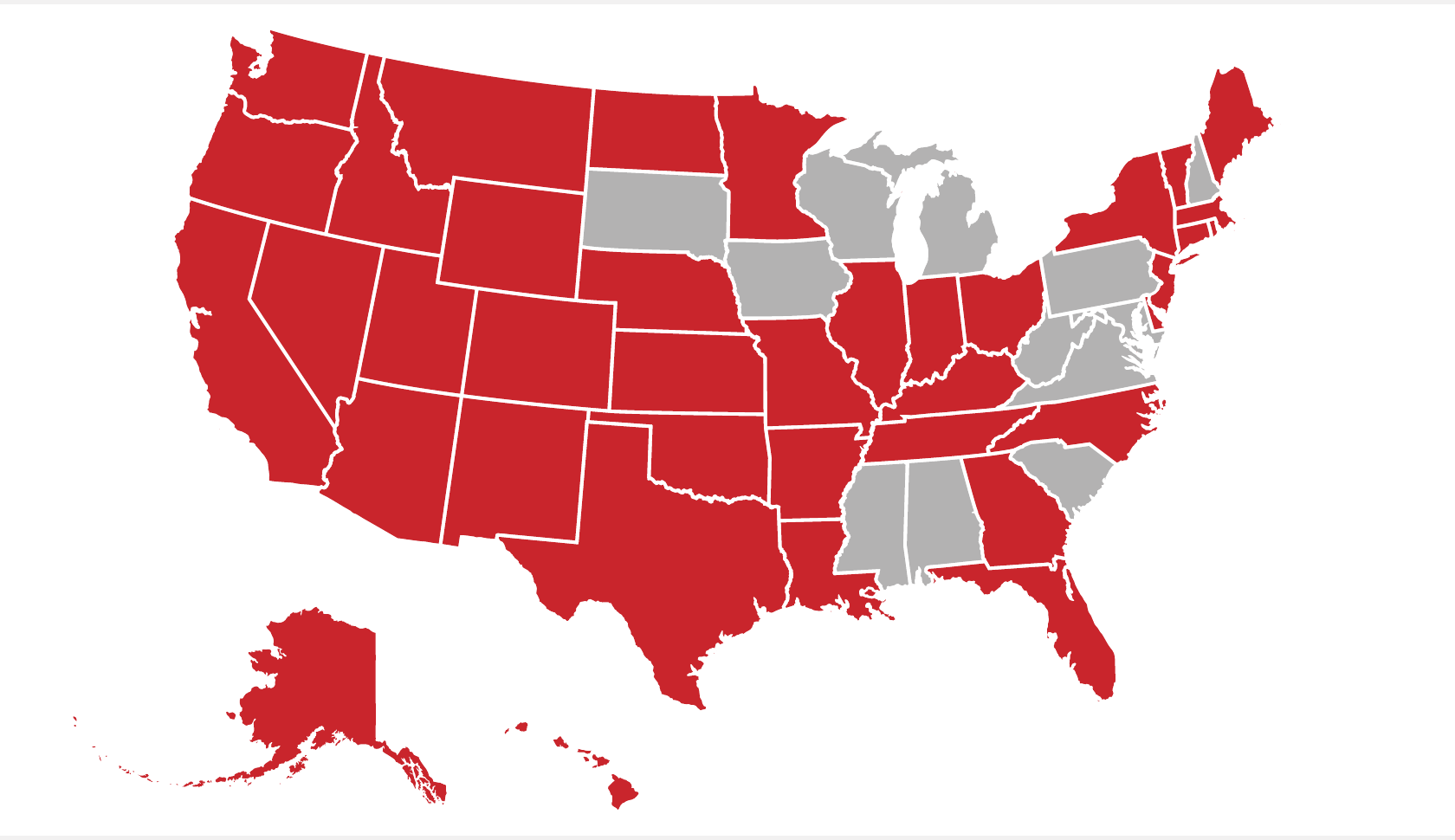
Pre-processing is one important policy choice affecting the speed of counting postal votes. Another is when a state sets its deadline for these votes. Here, there are essentially two options: a receipt deadline or a postmark deadline.
A receipt deadline requires votes cast by mail to arrive at the designated recipient (a county clerk or local board of elections as the case may be) by a certain deadline. Most often, this deadline is on election day. For obvious reasons, having all valid votes received by this date enables the count to proceed much faster than if votes are trickling in many days after election day.
The alternative to a receipt deadline is a postmark deadline. This policy requires the counting of all votes that are merely postmarked by a certain date, most often election day. Often, states combine these two, but in such a way that the postmark aspect is more relevant. California and New York, for example, both say that votes postmarked by election day can arrive and be counted up to seven days after election day. This policy is the primary reason California and New York are among the slowest-counting states.
There is a wide degree of variation among states that have deadlines later than election day (all of which still require ballots to at least be postmarked by that date). A receipt deadline within a day or two or three of election day, as some states have, will not produce as much of a delay in counting votes. At the other extreme, some states permit votes to come in as late as two weeks after election day (Illinois), or up to ten days later (Ohio, Maryland).
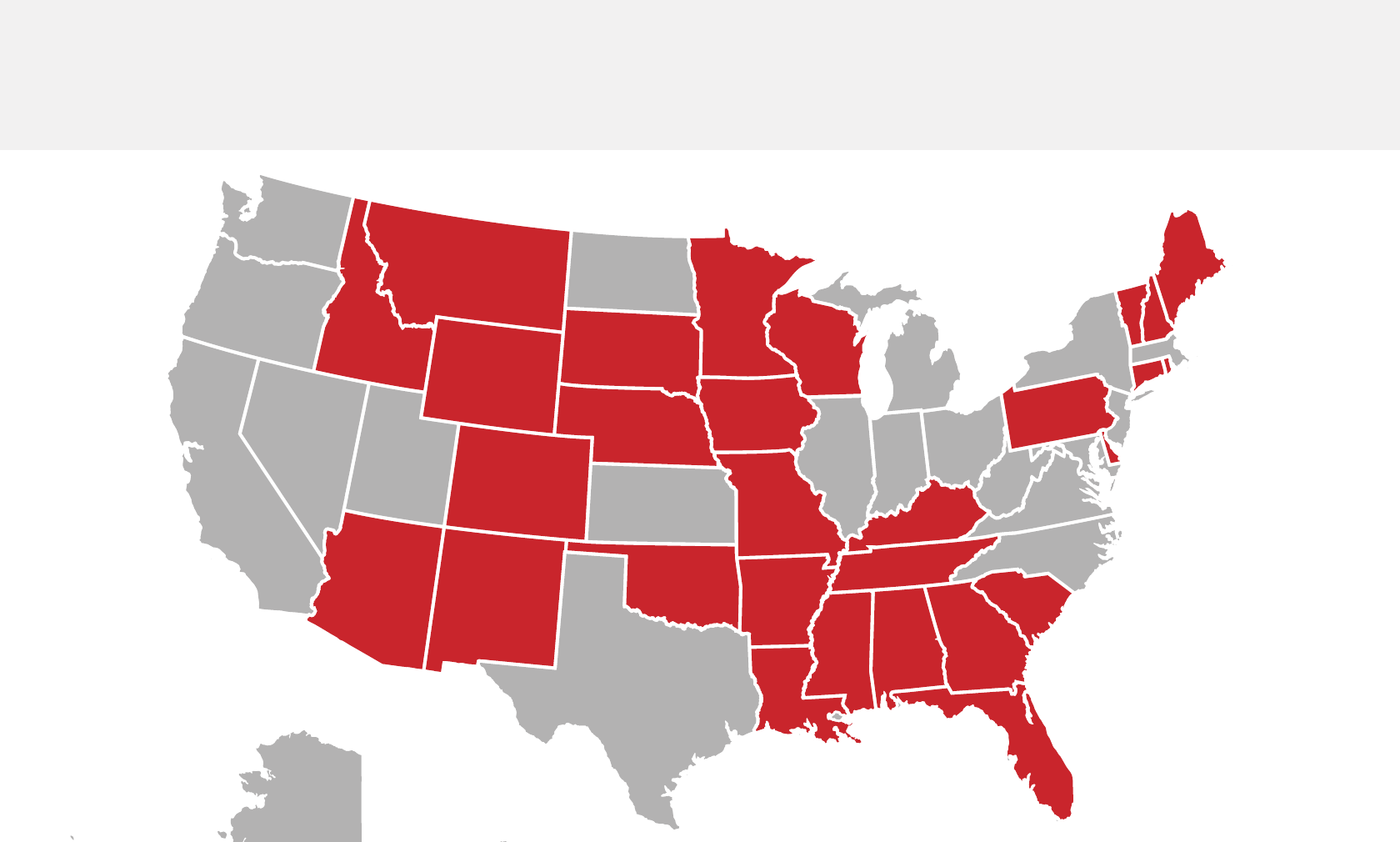
As with anything else in life where a mailed item needs to arrive by a certain date, it is incumbent upon voters to get their votes turned in in time. At most, a day or two of leeway should be provided for possible delays in the mail, but no longer. The use of drop-boxes to return ballots instead of the postal service is also preferable and should be encouraged, setting aside other arguments about the degree of supervision and security for drop-boxes. A vote turned in at the county elections office makes moot the whole argument about when it was received versus when it was postmarked.
The use of pre-processing can mitigate the lack of an election day receipt deadline, and vice versa. But the ideal policy to minimize delay after the polls close is the combination of both: all votes must arrive by election day or shortly thereafter, and election administrators should be pre-processing postal votes so they are ready to count on election day.
02. Use ID Numbers, Not Signature Matching
If you own a credit card, you’ve been asked to provide a signature, both on receipts and on digital touchscreens. And if you’re like most Americans, you jot down a random squiggle that’s not particularly recognizable as your “real” signature.
The idea of using signatures as a kind of identity verification is deeply embedded in our cultural history and traditions. It’s not just for credit card receipts. On millions of pieces of paperwork every day, we use the act of signing one’s name to indicate formal assent to a document and presumptively sufficient evidence of the same.
But the fact is, the actual identity verification value of a signature is essentially nil, which is why we don’t really use it for anything important or disputed. From financial transactions to contracts, whether or not a given person agreed to a particular document is rarely proven or disproven by handwriting analysis. As anybody who’s had to deal with a fraudulent credit card charge knows, an examination of penmanship is not typically part of the process.
One exception, unfortunately, is voting. Across the country, thousands of ballots are questioned and in some cases thrown out because of so-called signature verification. This process, in which election officials squint at scribbles and try to eyeball if they match a signature on file, is pseudoscience.
The rate of false positives (that is, a valid vote incorrectly deemed to have failed signature matching) is astounding. Orders of magnitudes more votes are cast into doubt on this basis than any plausible estimate of the actual prevalence of voter impersonation. And on the other hand, studies suggest signature matching also produces an abysmal rate of false negatives (that is, it’s unable to reliably detect the rare actually fraudulent signature). Overall, voter fraud cases of this sort are not common, but in the vast majority, signature matching played no part in revealing the deception and would not have provided sufficient proof for any conviction.
Signature matching can also produce unexpected partisan effects, with wild variations based on how aggressively or not local officials interpret the matching requirement. The whole process is, after all, hopelessly subjective. Any nominal standards a state might choose to adopt are illusory in practice.
There are two alternatives to signature verification. One option, used in most states without signature verification, is to require a witness signature, either from simply any eligible adult or by a notary public. Neither of these witness requirements are satisfactory. Simply allowing any witness adds nothing more than another useless signature to the process. The use of a notary ensures a high degree of trustworthiness, because notaries check IDs, but it imposes an excessive practical burden on voters.
The best option is to simply use the same system we use in every other context for identity verification: ID numbers. For most people, this means their driver’s license number, or otherwise an equivalent state-issued ID. These ID numbers are not generally public, but they are easily accessible by the state. Simply verifying that the ID number matches the voter’s name is perfectly sufficient to make any kind of large-scale organized fraud impossible. Some states go further and require a scanned copy of the ID card to be submitted with the ballot, but it’s the ID number that really matters.
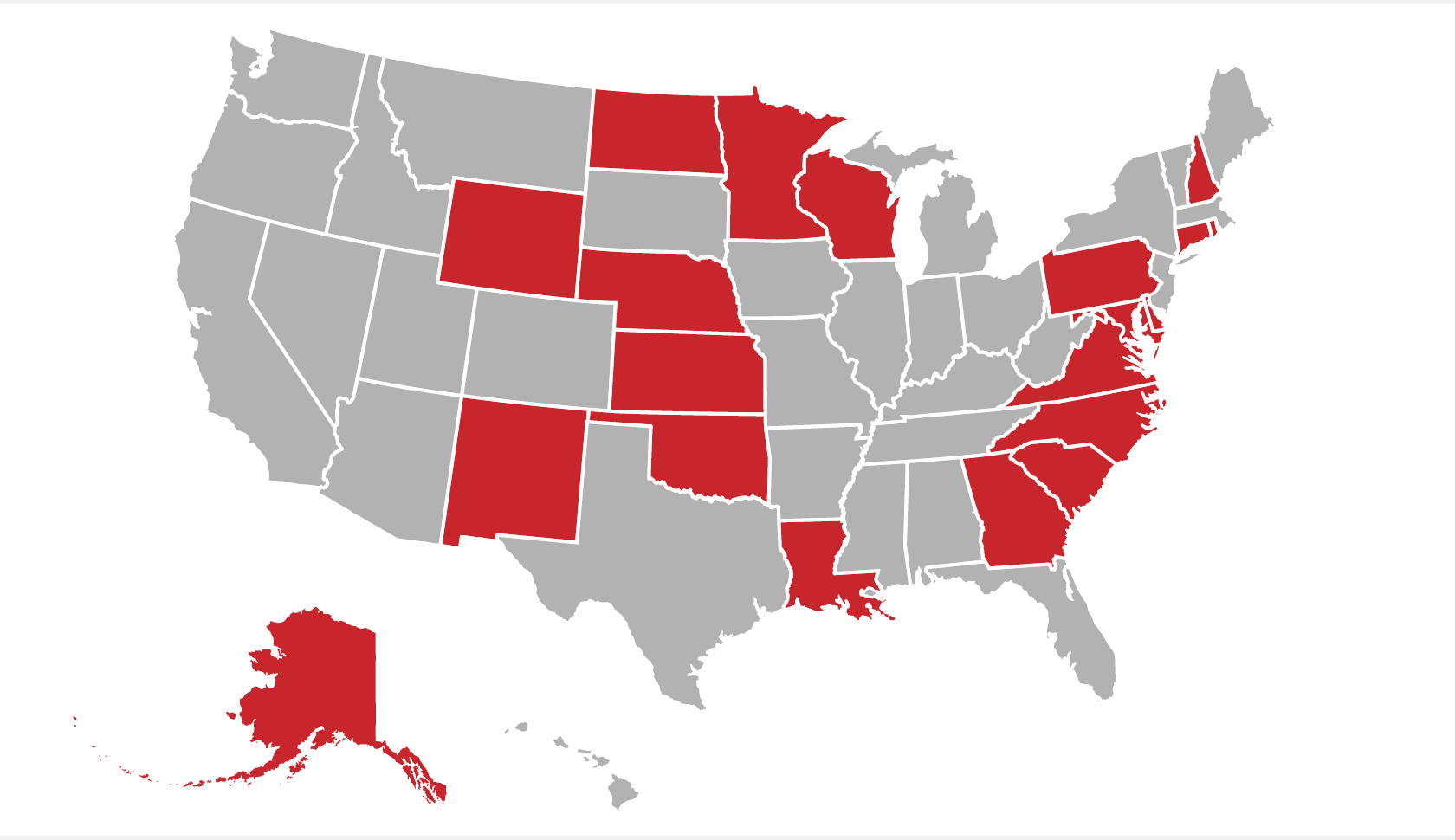
Signature verification delays vote counting because it produces many more ballots that must be set aside as provisional, with voters given the opportunity to cure them within a certain window. This process is deeply flawed, with low response rates, and the rules vary wildly by state. Most voters either do not see, or do not care enough, to respond to a mailed notification with the signed affidavit necessary to “cure” their ballot. In small enough numbers, ballot curing does not affect enough votes to leave an election’s outcome in doubt. But with more ballots affected, close elections can devolve into a desperate campaign by both parties to get their voters to respond and cure their ballots.
Signature matching is junk as a security measure, demands election administrators engage in an activity for which they have no suitable expertise, needlessly throws thousands of ballots into doubt for no good reason, can be subject to biased partisan manipulation, and fuels a protracted post-election process of curing ballots.
Moving from signature verification to requiring a witness signature is an improvement, but states should be primarily relying on IDs to verify a person’s identity. That’s what they’re for.
03. ERIC is Your Friend
Maintaining accurate voter registration rolls is a difficult task. Americans move about constantly, both inter-state and intra-state, and few bother to notify the state or local government of their departure. On top of people moving, there’s the simple fact that people die, and dead people voting is not a good look for any democracy. Compiling all this information from disparate sources can be a fiendishly complicated and politically contentious task. On the one hand, the authorities risk being accused of enabling fraud, and on the other hand, of voter suppression by wrongly purging valid voters.
Luckily, there is an available mechanism to make this task much easier: ERIC, the Electronic Registration Information Center.
ERIC is an interstate compact, a voluntary agreement among thirty states to provide timely, regular sharing of information from their respective voter, driver, mortality, and other such databases. The states do this on a regular schedule and in a standardized format.
Suppose, for example, a voter who moves from Texas to Wisconsin and obtains a new Wisconsin driver’s license. This fact would be reported to Texas through ERIC, enabling Texas to remove this person from the voter registration list. The same applies if one state’s registered voter dies in another state, or registers to vote in another state.
ERIC member states also send mailers encouraging identified eligible voters who are not yet registered to do so. This not only gets more eligible voters registered, it also makes things easier for all the other states. Some of these newly registered voters will be flagged as needing to be removed from their former state’s voter rolls.
ERIC provides states with a concentration of technical expertise in vital statistics that can be difficult to replicate within a state, particularly a small state. And while ERIC’s processes only directly apply to voters who move interstate, the same policies and processes can be directly applied as best practices for intra-state handling of the same issue.
The costs of ERIC are minimal, the benefits are substantial, and it’s a shining example of bipartisan cooperation to both combat possible fraud and to reduce wrongful purges of ineligible voters. It does the former by directly providing high-quality data, and it does the latter because without relying on ERIC’s standards, states can be tempted to go for less precise methods with higher failure rates.
Both parties have a direct interest in making voter registration data as complete and accurate as it can be, and by that measure, there’s no substitute for being a member of ERIC. And when it comes to getting votes counted quickly, more accurate voter rolls mean fewer provisional or uncertain ballots to be sorted out after election day.
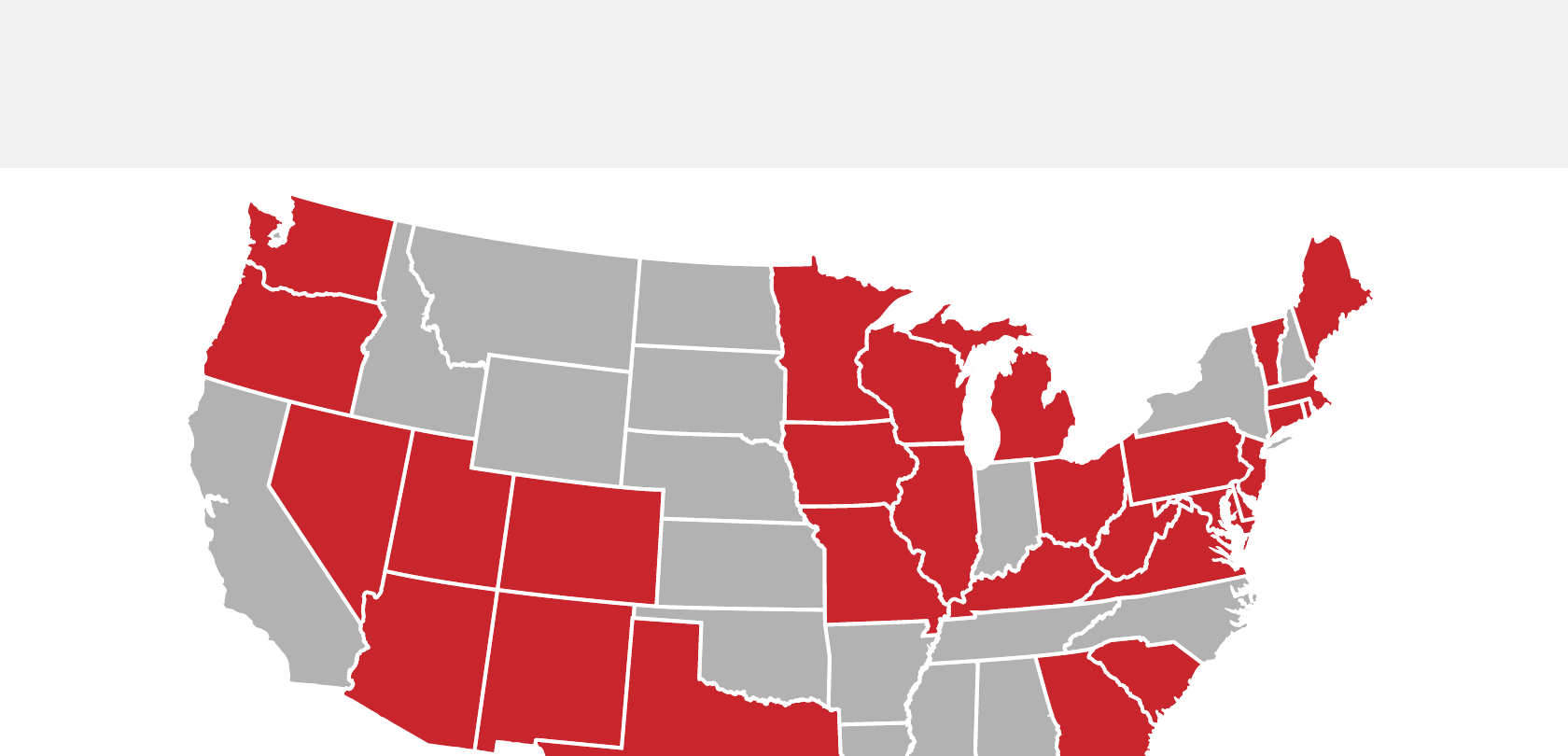
Unfortunately, ERIC has become a more partisan flashpoint. One of the areas of disagreement has been the package deal, so to speak, which has been part of ERIC since the beginning. States are obligated to engage in the data sharing discussed above, but they are also required to conduct mailings to eligible but unregistered voters. A proposal to decouple these two requirements, to make ERIC’s services a la carte, was recently narrowly defeated along largely partisan lines. This has fueled talk of Republican states withdrawing.
Leaving ERIC over the requirement to conduct mailers encouraging voter registration would be a mistake. The policy is unobjectionable, relatively inexpensive, and the assumption that it helps Democrats is inaccurate. Even for a state that prefers to not conduct mailings, the benefits of ERIC’s data-sharing far outweigh the downsides.
For our purposes, ERIC also makes canvassing quicker for the simple reason that it reduces the number of provisional ballots that must be set aside and subject to a protracted post-election process of “curing.” The use of provisional ballots is required under federal law, the Help America Vote Act of 2002, and many states have more extensive rules and procedures. Within those legal constraints, improving the accuracy of the voter rolls reduces the most common reason for a voter being instructed to use a provisional ballot.
04. Provide Sufficient Manpower
This one might seem obvious, but it’s also the point that makes the most difference after allowing pre-processing. Many locations with high-profile protracted vote counts are simply suffering under too many votes with not enough vote counters.
Feeding votes into an optical-scan counting machine is a tedious process. For the most part, the machine can only count one vote at a time. They can be set up to accept a stack of votes in a feeder tray, but even this requires monitoring and replenishing the votes as needed. And as anybody who’s ever suffered with an office printer can attest, malfunctions happen. Votes sometimes get jammed, or the machine fails and has to be replaced. All of this takes substantial manpower to administer, albeit a small fraction of what would be needed for hand-counting.
Some states rely on volunteers, but for most that isn’t enough. This means recruiting short-term employees paid a reasonable sum for a few days of work. This pay in and of itself isn’t necessarily the problem, but the process of hiring and administering these workers inevitably involves full-time professional civil servants. It is at this level that the chokepoint can arise: not enough resources to cover the administrative burdens of spinning up this fairly large, very short-term workforce. The same can apply to recruiting, organizing, and supervising volunteer poll workers.
These resource needs will vary based on voting methods and procedures. In-person voting mostly involves the voter themselves feeding their ballots into the counting machines when they are cast, minimizing the amount of work needed on the back end. Votes cast by mail, on the other hand, must be opened, processed, and counted by election administrators.
Other variations include whether counting happens on-site at polling places at the precinct level, or centralized counting sites are used. The trade-off is that centralized counting can leverage economies of scale, but on the other hand, the process of transporting ballots adds its own delays. The reasonable balance between those two considerations will be largely determined by population size and density. Large cities and urban counties will typically find centralized counting the better option, while more rural areas with smaller precincts and longer travel times will find the more decentralized system preferable. Many states provide a degree of local-option control over the matter to accommodate these differences.
Whatever policy choices a state makes, it must then be willing to spend the resources necessary to make its elections work. Funding for election administrators, including federal assistance, should be directed to the local level where it is needed and should be provided on a steady, predictable, and sufficient basis. Conducting elections is a core function of government, the constitutional bedrock of our entire system. And doing it right is not, in the grand scheme of things, very expensive. This is not the place for penny-pinching or unpredictable budgeting.
State legislators should work closely with county clerks, local boards of elections, or their equivalent local administrators to have ongoing, realistic assessments of budgeting needs, including their manpower requirements for temporary election workers. State legislators should be cognizant of how increased funding for state-level election agencies (the secretary of state’s office in most states) does not necessarily get where it is needed at the local level. While statewide agencies play an important role and must also be sufficiently funded, they are generally not in the business of actually running polling places and counting votes. And where possible, policymakers should favor steady, predictable funding streams over one-off, unpredictable lump sums driven by particular events in the news.
Insufficient funding of local election administration can lead to problems beyond just slow vote counts. Deprived of public funding for this quintessentially public function, localities are more tempted to turn to private sources of funding. These grants from non-profit organizations may be well-intentioned, but they have been a source of intense controversy. So-called “Zuckerbucks” (from the foundation of Facebook founder Mark Zuckerberg) in some states seemed to be allocated in a way that favored get-out-the-vote operations in predominantly Democratic-leaning cities. While the degree of actual impropriety has been heavily disputed, it’s not a good look in even the best-case scenario. Recent moves by some states to prohibit the practice are not without merit.
If a state is going to cut off outside grant funding, it is all the more crucial for public funds to make up the difference. And the burden should not fall solely on counties and municipalities, who already shoulder some of the largest costs of government with the least tax revenue. Conducting elections is, after all, a kind of mandate. It’s a federal mandate on the states, and a state mandate on the localities. It’s reasonable for those higher levels of government to pick up their share of the tab and to avoid treating elections as an unfunded mandate on already strained local government budgets.
05. Don’t Mess with the Machines
As noted above, the fundamental fact of American elections is our reliance on machines to count the votes in a timely manner. It simply cannot be any other way given how many offices we have to elect. Unfortunately, voting machines have also been the focus of baseless conspiracy theories and dedicated campaigns of election subversion.
Voting machines are not rigged. There is no known case of deliberate malfeasance with the counting machines altering the vote totals in any modern American election. Even historical examples of large-scale fraud used other means, such as stuffing ballot boxes with fake votes, or fraudulent hand-counting. The machines themselves are trustworthy. They are, after all, the simplest and oldest kind of computer.
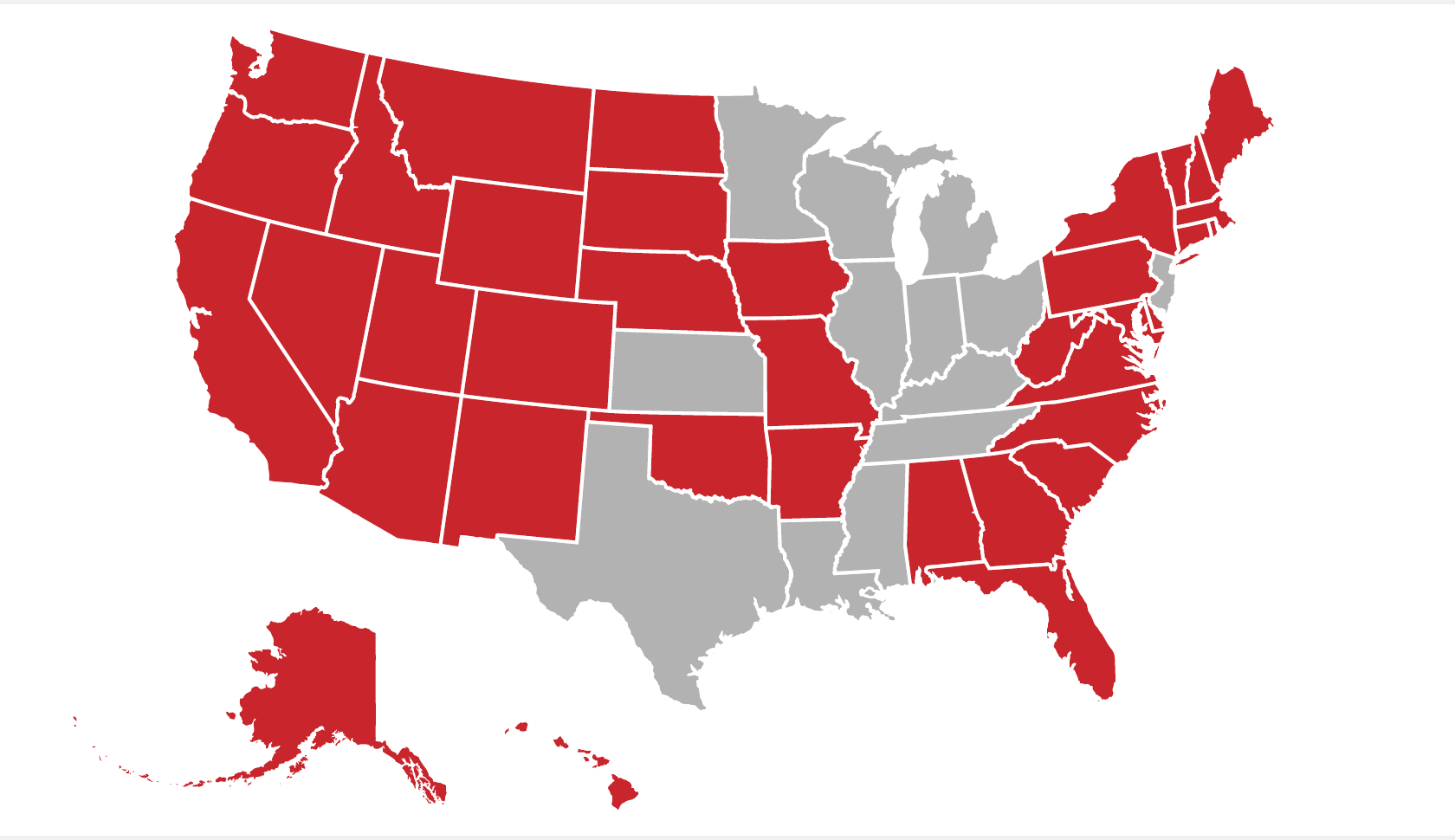
The fact that almost every state already uses 100%, or nearly 100% auditable paper trails further confirms this. And the most widespread kind of machine, optical-scan devices, are highly reliable and achieve rates of accuracy far beyond what any human could.
Counting ballots by hand would be monstrously expensive, terribly slow, and unacceptably inaccurate. The number of votes a single individual can count by hand over the course of a week, when there are dozens of races on each ballot, is in the hundreds or low thousands at most. States have millions of votes to count. Counting by hand every ballot for every election is not physically possible within the given time and resource constraints.
States should also reject any novel technological mandates when it comes to their machines. States already can, and many do, avail themselves of the federal Election Assistance Commission’s (EAC) certification of voting machines, a policy which is also tied to some of the EAC’s grant programs. As with ERIC, this sort of standard-setting can be outsourced to professionals better than it can be done by a state going it alone. If a state wishes to codify standards, it can do no better than simply requiring everywhere in the state to use EAC-certified machines.
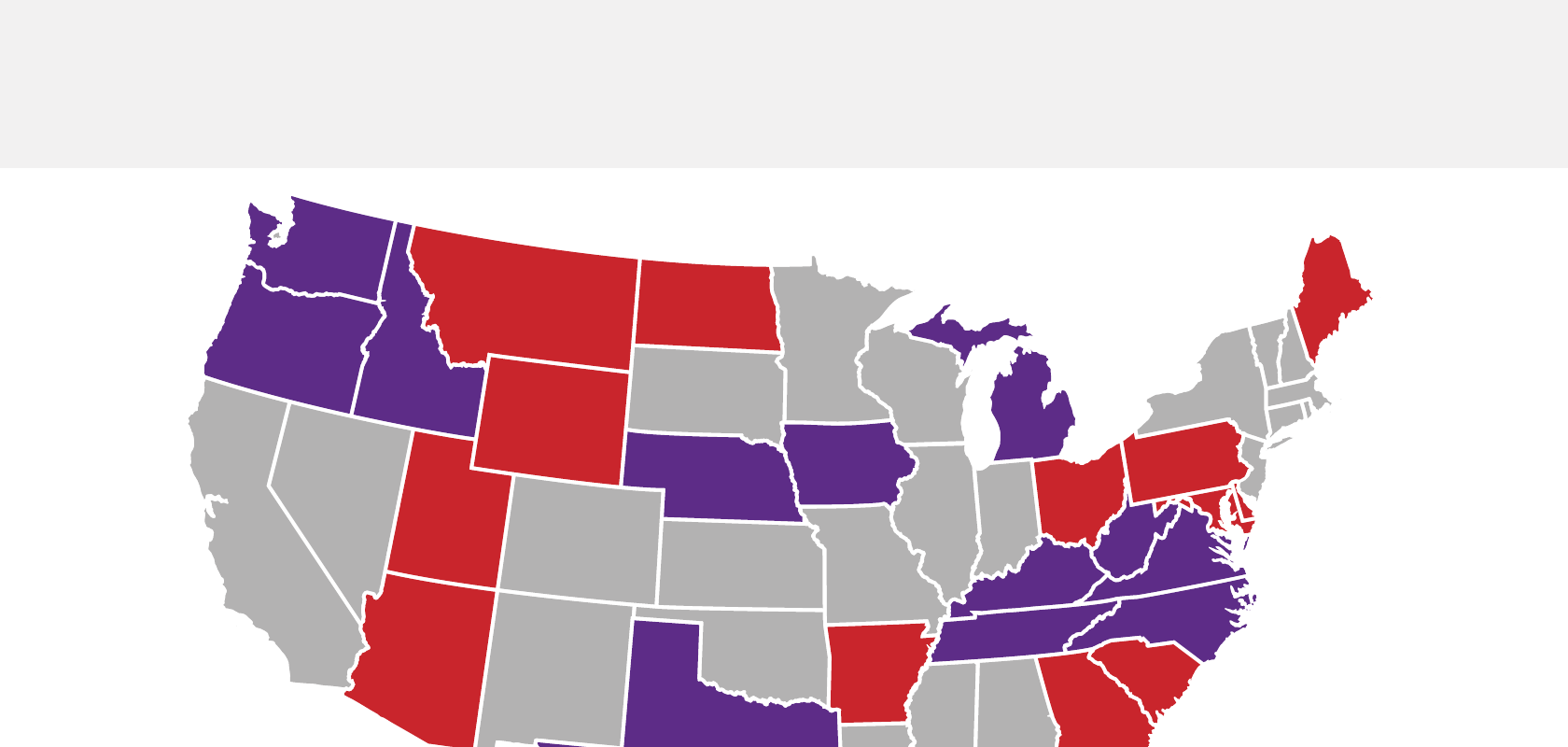
States should not codify into law any particular vendor, nor any excessively detailed set of requirements such as to effectively name a particular vendor. So long as a machine meets reasonable standards, the competitive market and open-bidding process should be allowed to play itself out. Technology that’s the best available today may well be obsolete or insecure in five years. The hands of election administrators should not be tied on a statutory basis.
One thing the states can do is set requirements for routine post-election audits, using random sampling and hand-counting to verify the accuracy of the machines. Here is where the requirement for a 100% paper audit trail is invaluable. In this manner, states can not only conduct accurate hand recounts in cases of disputed elections, they can also ensure no major problems are flying under the radar undetected.
Conclusion
America is a pioneer in democracy.
This observation is often taken for granted, but it’s not limited to grand constitutional principles, as important as those are. It also means the United States has been on the cutting edge of the nuts-and-bolts practicalities of administering elections on a scale unknown to the rest of the world.
From the earliest adoption of ballots instead of voice voting, to the primitive proto-computer voting machines of the 19th century, to stamping out large-scale fraud through tamper-proof seals and chains of custody in the 20th century, to perfecting the use of optical-scan ballots in the 21st century, the United States is not a backwater. If it seems sometimes as if we have the most and the highest-profile fiascos, it is largely because we are so committed to elections that we have many more of them than anywhere else. It would be a mistake to conclude that American elections are poorly conducted by global standards.
But there is always room for improvement. The American spirit of experimentation, of striving towards a more perfect Union, of states serving as laboratories of democracy, is as alive and relevant today as it has ever been. As states and localities pursue novel electoral reforms to grapple with the problem of spiraling partisan polarization, it is all the more crucial that the process of administering elections must be unimpeachable, or as near to it as any human institution can be.
People are right to be frustrated with the slow pace of canvassing, particularly when a crucial national outcome such as a presidential election or congressional majority hangs in the balance. Elections are at their core a conflict resolution mechanism. Elections are how we settle our differences peacefully instead of with fratricidal violence. Fulfilling that purpose requires elections that are resolved with finality, confidence, and speed, so that we can all move on to the real business of self-government.
By adopting best practices for getting votes counted quickly after the polls close, policymakers of both parties can contribute to shoring up public confidence in our elections. This popular support, the people’s acceptance of the legitimacy and honesty of the system, is the foundation of our constitutional system of government. It’s always worthwhile to patch up any cracks in that foundation before they can worsen and grow.
Andy Craig is director of election policy at the Rainey Center and an adjunct scholar at the Cato Institute. His work is focused on election law, electoral reform, and political incentives, with the goal of reducing polarization and improving representative government. His analysis and recommendations have been cited by members of both parties on the floor of the House of Representatives and in the Senate Rules Committee, in addition to working with state legislators across the country to craft electoral reform proposals and adopt best practices for election administration. His commentary has appeared in outlets including the Washington Post, Fox News, The Nation, and Politico, and he writes regularly for The Daily Beast and The UnPopulist.