Key findings
- Favorability runs 29% to 57%, with 34% very unfavorable.
- 79% say neither they nor anyone they know has attended a meeting or signed a petition about a proposed data center.
- In the paired lawmaker exercise, the winner at 64% recruits investment while requiring developers to bring their own power, hold public meetings, sign benefits agreements, hire locally, and lose power before homes do.
- 71% support requiring operators to sign a community benefits agreement before construction, with 12% opposed.
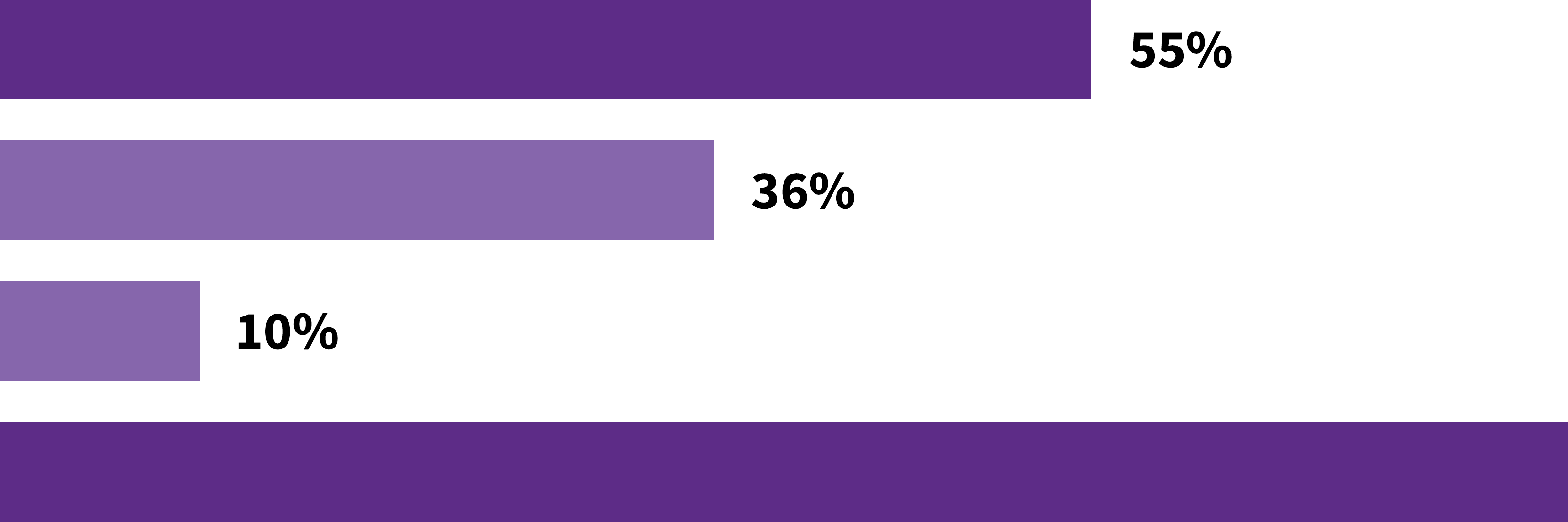
- Daily AI users favor data centers 57% to 34% and support one in their community 55% to 36%.
Opinion is negative and almost entirely secondhand.
Favorability runs 29 to 57 and local opposition 27 to 62, but 79% have no contact with any project and a quarter cannot say what a data center does.
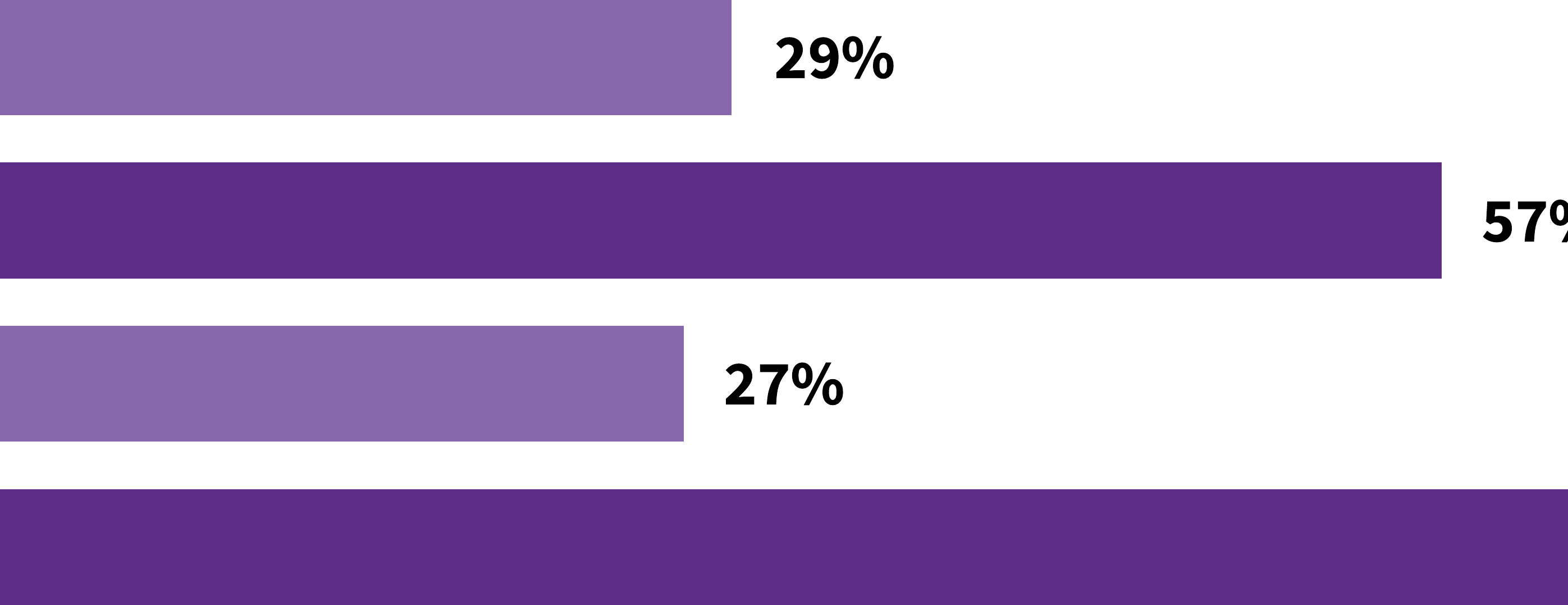
Initial views on data centers is negative, with favorability at 29% against 57% and opposition to a project in the respondent’s own community at 27% against 62%. However, the rest of our survey establishes that most of that opinion rests on almost no direct experience: 79% report that neither they nor anyone they know has attended a meeting or signed a petition about a proposed project, 48% say no data center exists in their community and another 23% cannot say and 24% cannot identify what a data center does.
Rainey Center surveyed 1,004 registered voters via online panel, September 10–14, 2026. Weighted on age, gender, race, education, 2024 vote recall, and region. Margin of error ±4.9 points at the 95% confidence level.
- 57% Unfavorable toward data centers, against 29% favorable
- 79% Know no one who has attended a meeting or signed a petition
- 64% Of pairings won by conditional recruitment, the leading approach
Depth of Opinion
Our research on water is an example: 48% of voters believe a data center uses far more water than almost any other kind of facility and 26% are unsure, and among those who believe it, 45% attribute the claim to local television or a local newspaper, 32% to a national newspaper, and 27% to cable news, while TikTok, X, and Reddit account for 7%, 4%, and 4%. We have found previously that when the truth about water is presented, voters change their minds.
Message Testing
Like the way a “generic” opponent performs, opposition to data centers is strong in abstract. But when voters are presented with an actual package for their community, support increase. We ran a max-diff exercises that presents pairs of lawmaker approaches, drawing from actual legislators and what they are proposing.
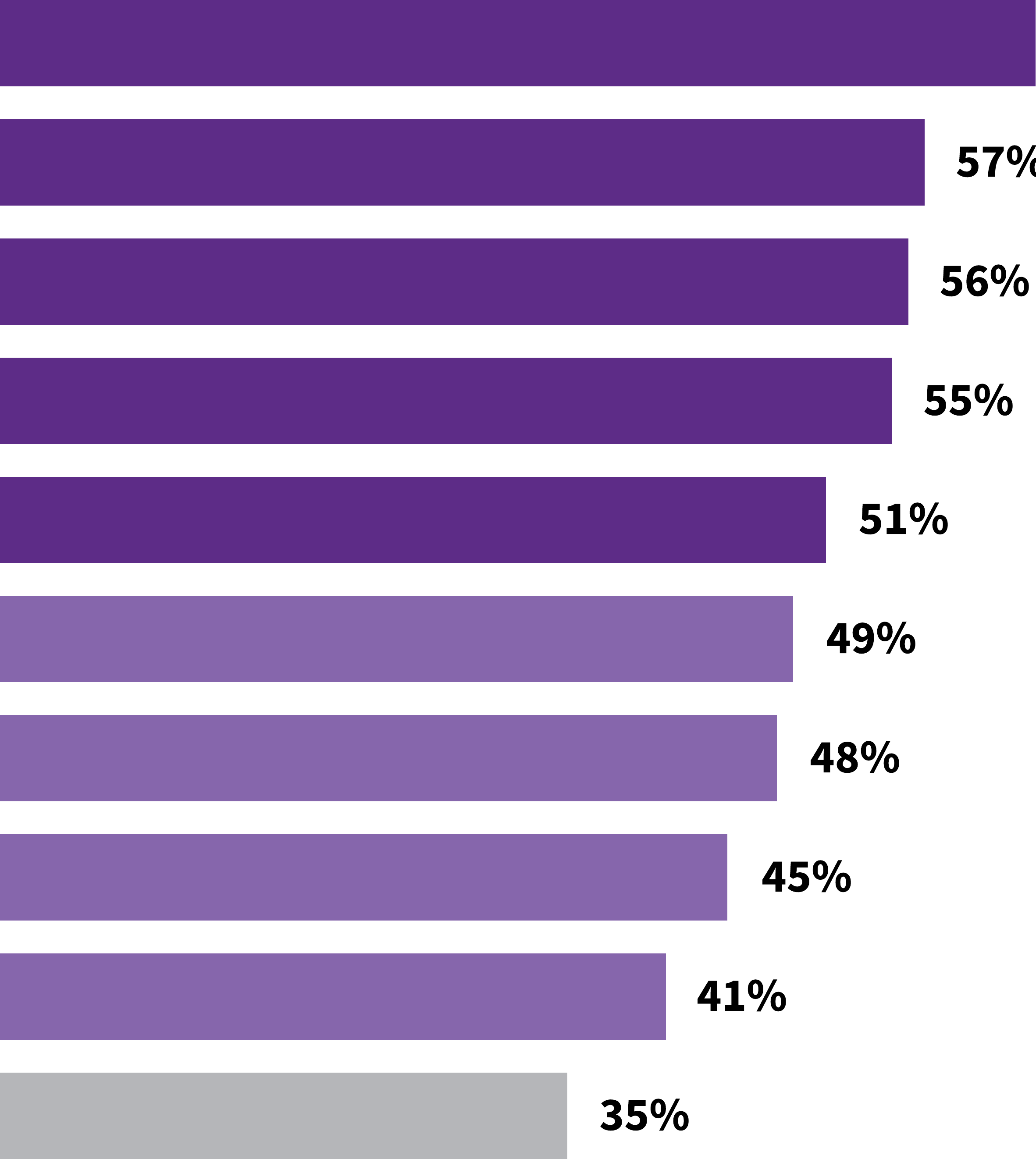
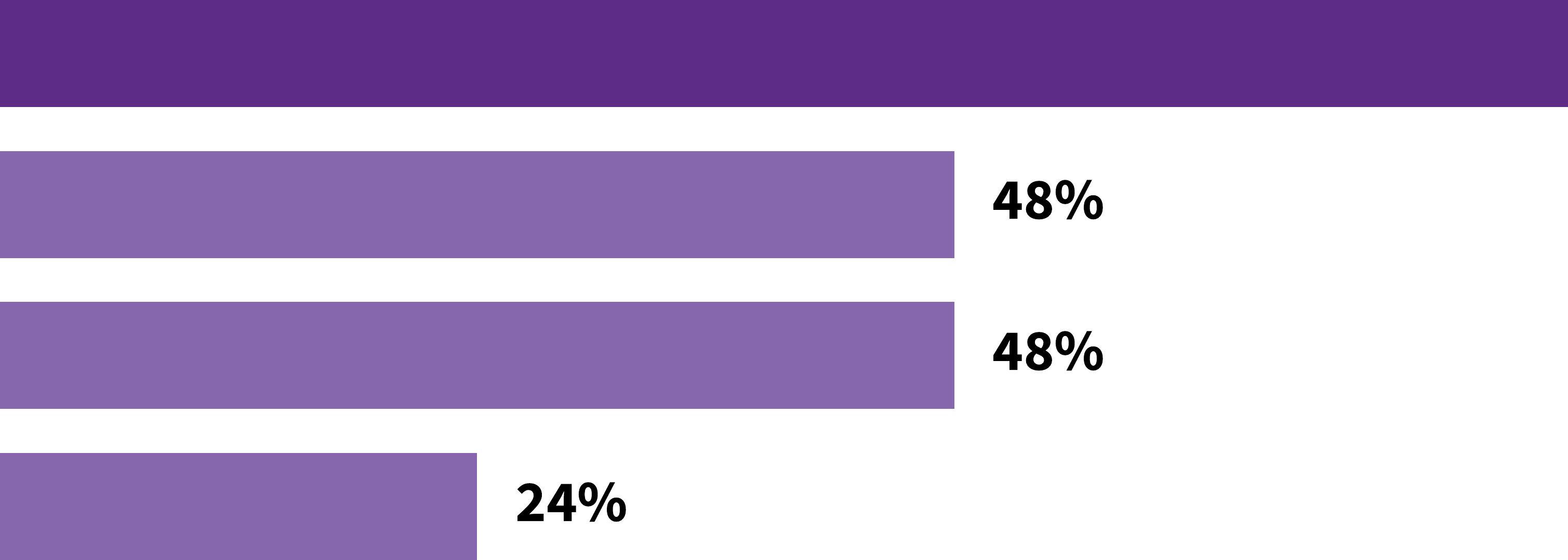
The most popular paired lawmaker exercise is won at 64% by an approach that recruits major investment while requiring developers to bring their own power with a growing share of clean energy, hold public meetings, sign community benefits agreements, hire locally, and accept curtailment before residential customers, while a one-year statewide moratorium takes 51% and an approach defending existing tax breaks finishes last at 35%, behind every alternative tested including the moratorium.
The second and third approaches are restrictive and finish within a point of each other, with 57% for halting approval of the largest projects until statewide standards are finished while requiring developers to pay for grid upgrades and fund their own clean power, and 56% for ending all state tax breaks and subsidies on the argument that taxpayers should not be underwriting the wealthiest companies in the world. The fourth approach, at 55%, welcomes the investment outright with local consent, a ban on secret agreements between developers and officials, and a requirement that companies pay for grid upgrades, which means the top four approaches span only nine points and every one of them shifts a cost off the ratepayer and onto the developer. At the other end, an approach that creates state-designated districts and preempts local zoning so counties cannot block projects takes 48% even though it shields ratepayers and splits the property tax revenue between an income tax cut and the counties, an approach that aggressively recruits to win the AI race takes 41% despite requiring the largest facilities to pay their own grid connection costs and power down before residents, and the approach that simply preserves existing tax breaks and vetoes any attempt to repeal them takes 35%. The pattern across the full ten is that cost protection alone does not carry an approach, since the 41% finisher contains it and loses by 23 points to the winner, and what separates the top tier is the addition of community consent, public meetings, and a signed agreement.
Exposure Predicts the Split
Exposure to the technology predicts the split more cleanly than party does, since voters who use an AI tool daily support a data center in their own community 55% to 36% while voters who never use one oppose it 79% to 10%, and that second group is contracting as adoption spreads, with 52% now using these tools at least monthly and 42% using a chatbot.
The Validator Cannot Be a Frontier Lab
The companies themselves are among the best-regarded institutions measured anywhere in American survey research, with Google at 88% favorable, Amazon at 83%, and Microsoft at 83%, which sits well above the 29% the same respondents give to data centers as a category.
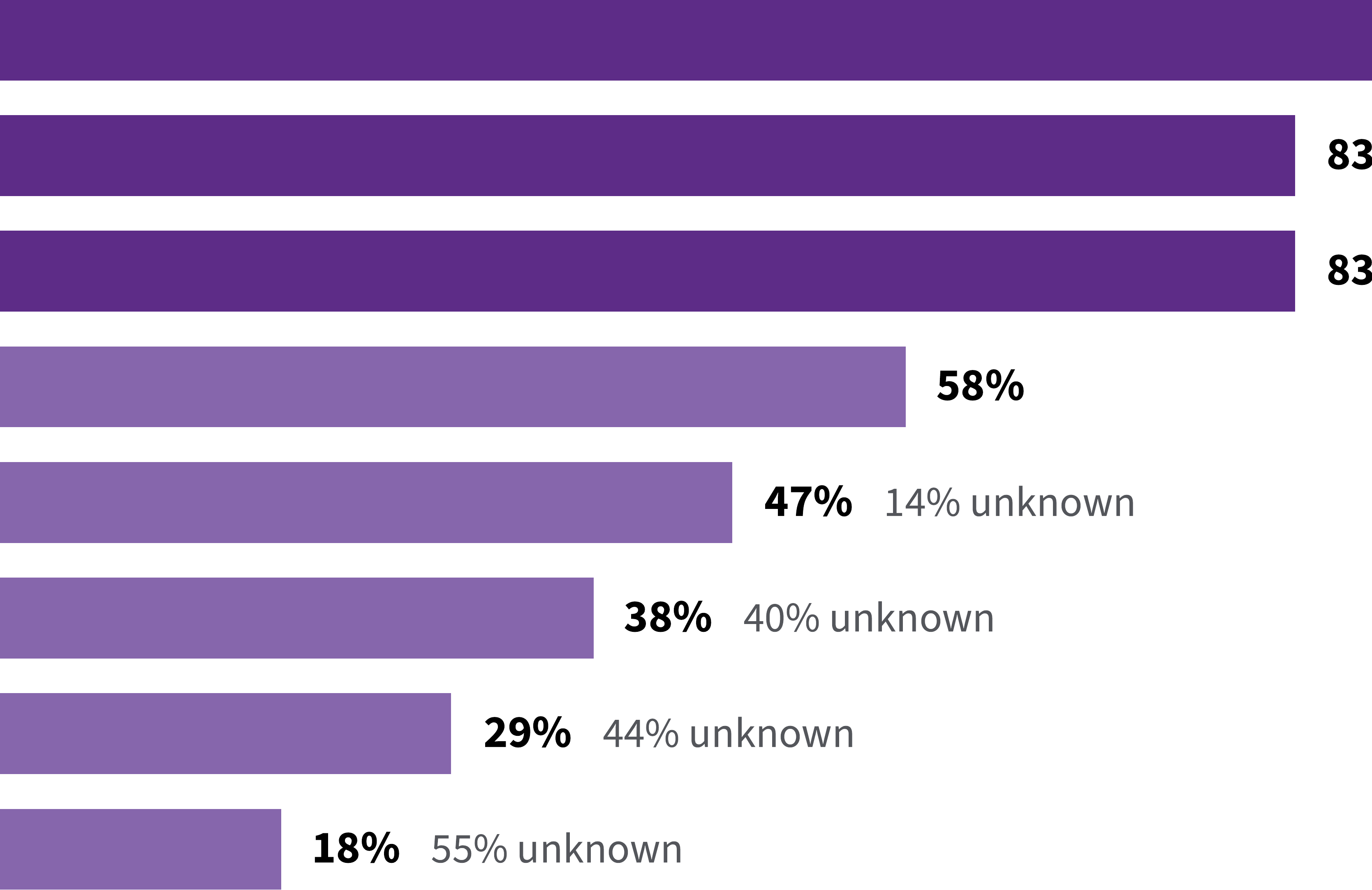
That goodwill belongs to the hyperscalers and does not extend to the AI labs, since OpenAI runs 47% favorable against 38% unfavorable, Anthropic runs 29% against 28% with 44% who have never heard of it, and xAI runs 18% against 27% with 55% who have never heard of it, which places every lab between 36 and 59 points below Google. The people who run these companies are further behind than the companies themselves, because 68% have never heard of Sam Altman and 90% have never heard of Dario Amodei, while Elon Musk is the only industry figure known to nearly everyone and runs 39% trust against 59% distrust. Asked whom they would trust most to explain the problems and opportunities of AI, 21% name universities and academic researchers, 17% name AI companies and technology industry leaders, and 32% name nobody or cannot say. The practical implication is that the validator for any data center or AI infrastructure argument has to be a hyperscaler, a utility, a local employer, or a university, and it cannot be a frontier lab or the person who runs one.
Demands Are Procedural, Not Prohibitive
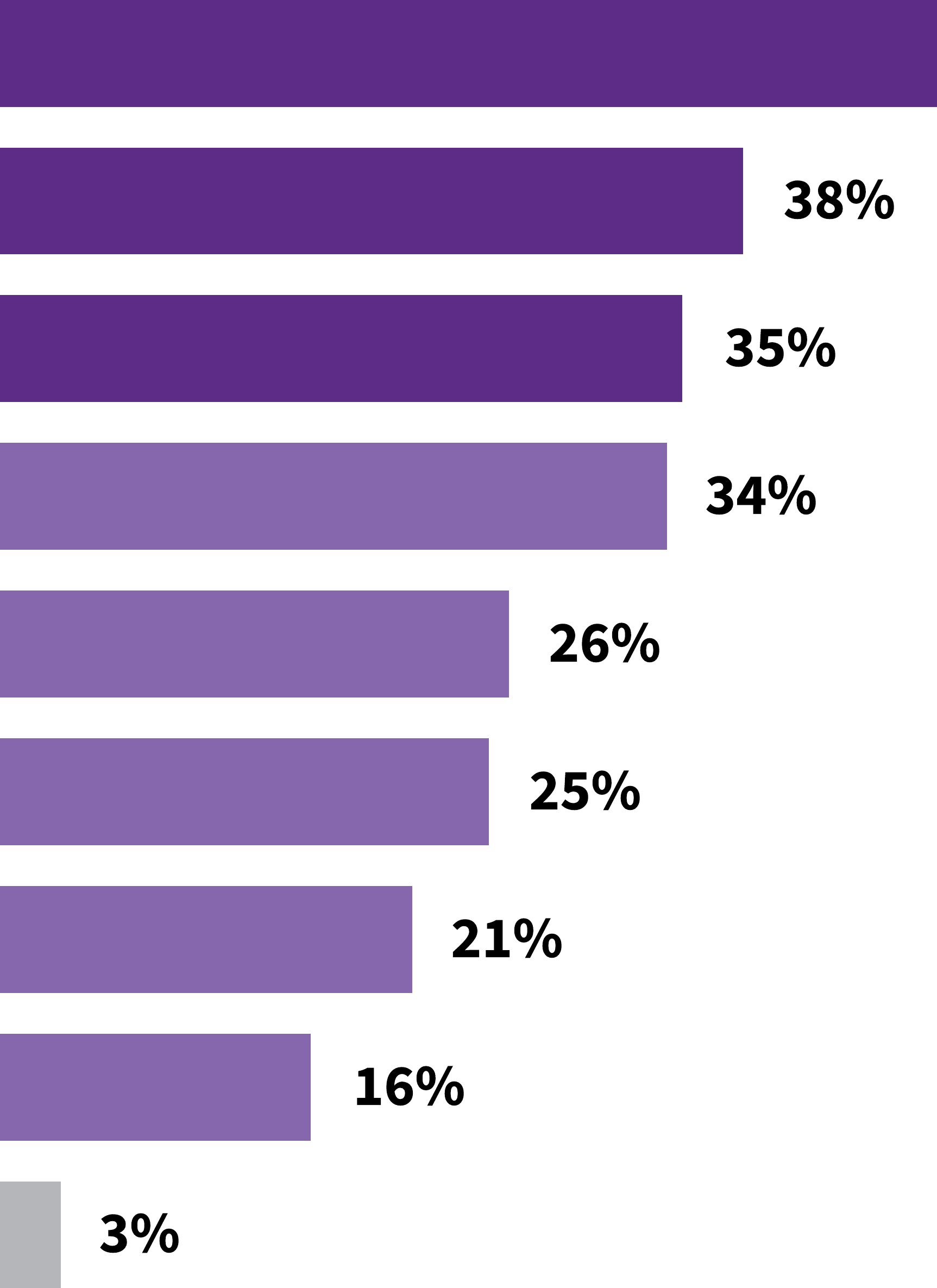
There is no meaningful constituency for stopping AI development, given that 16% want to pause or slow it and 3% say lawmakers should not act at all, and the demands voters do make are procedural rather than prohibitive: 48% name holding AI companies legally responsible for harms as a top priority for lawmakers, 78% support requiring markers on AI-generated content, and 38% want lawmakers to make data center companies pay for their own electricity, a figure on which Democrats and Republicans land within a point of each other.
Republicans are more available for the affirmative case than the topline suggests, because they say 50% to 32% that cybersecurity threats are a reason for the United States to build newer and more secure digital infrastructure while Democrats break the opposite way 48% to 37%, they favor regulating AI mostly at the federal level 67% to 18% even though the state-level option was labeled a laboratory of democracy, and they match Democrats exactly at 73% in calling it extremely or very important to stay ahead of China. What Republicans will not support is the subsidy itself, which is the single worst-performing position in the entire exercise.
The variable that determines whether a specific project survives contact with voters is the electricity bill, since 28% of unfavorable voters name electricity costs for local residents as their main concern against 2% naming noise or appearance, every package clearing 55% in the paired exercise contains a ratepayer protection provision, and the two lowest performers contain none.
Findings
Political Environment
Groceries, gas, and utilities lead issue salience at 57%, twice the share naming jobs and the economy (30%). Healthcare costs draw 29%, Social Security and Medicare 26%, housing 20%, taxes 17%, immigration 17%.
AI draws 12% and data centers 7%.
80% call inflation critical to their daily life, ahead of healthcare costs (60%), crime (47%), housing (42%), and election integrity (41%).
Data Centers: Depth of Opinion
79% say neither they nor anyone they know has attended a meeting or signed a petition about a proposed data center. 5% have done so themselves.
48% say there is no data center in their community and 23% are not sure. For most voters the question is hypothetical.
Asked what data centers do, 64% name AI tools, 32% websites and online shopping, 26% file storage, 24% banking transactions. 15% say they monitor citizens for the government, 13% say crypto mining, and 24% are not sure.
48% believe a data center uses far more water than almost any other kind of facility, and 26% are not sure. Among believers, 45% heard it from local TV or local newspapers, 32% from national newspapers, and 27% from cable news. TikTok draws 7%, X 4%, and Reddit 4%.
8% say they have seen or heard nothing at all about data centers.
Data Centers: Direction of Opinion
Favorability runs 29% to 57%, with 34% very unfavorable. Opposition to a project in the respondent’s own community runs 27% to 62%.
Daily AI users favor data centers 57% to 34% and support one in their community 55% to 36%. Voters who never use AI oppose one 79% to 10%.
Republicans are less hostile than Democrats: 36% favorable against 26%, and 55% opposed to a local project against 63%.
Opposition rises with age. 65% of voters over 65 strongly oppose a local project, against 39% of voters aged 18 to 34.
Company favorability runs far ahead of the category. Google is 88% favorable, Amazon 83%, Microsoft 83%, Meta 58%, OpenAI 47%. 44% have never heard of Anthropic and 40% have never heard of Oracle.
Among unfavorable voters, the top concern is electricity costs for residents (28%), then water (18%), distrust of the companies (14%), AI job loss (11%), land use (8%), and the approval process (8%). Noise and appearance draw 2%.
Data Centers: What Voters Want
71% support requiring operators to sign a community benefits agreement before construction, with 12% opposed.
38% call it a top priority for lawmakers to make data center companies pay for their own electricity. Democrats and Republicans agree at 40% and 39%.
In the paired lawmaker exercise, the winner at 64% recruits investment while requiring developers to bring their own power, hold public meetings, sign benefits agreements, hire locally, and lose power before homes do. A one-year statewide pause takes 51%. Defending existing tax breaks finishes last at 35%.
Every package above 55% contains a ratepayer protection provision. The two lowest performers do not.
The single-choice follow-up splits ten ways with no option above 14%.
Local job creation moves 33% toward support and 18% toward opposition, with 38% saying it makes no difference.
40% say a candidate’s opposition makes them more likely to vote for him and 15% less likely, while 45% say it would not affect their vote or are not sure. In a two-candidate county race the opponent wins 44% to 20%, and 57% to 15% among rural voters.
Cybersecurity
86% are concerned about cyberattacks on critical infrastructure, including 49% very concerned. Democrats and Republicans are identical at 86%.
Only 37% have heard a lot or some about such attacks in recent months. 27% have heard nothing at all.
45% say attackers exploit outdated systems and weak security. 28% believe advanced AI carries out the attacks on its own, including 27% of Democrats and 26% of Republicans.
41% blame foreign governments, 15% criminal hacking groups, 10% AI acting alone, and 26% are not sure. Republicans name foreign governments at 47%.
72% would require stronger cybersecurity standards for infrastructure even if costs rise. Democrats 75%, Republicans 70%.
70% call it extremely or very important to train and hire more cybersecurity workers.
Voters split 41% to 42% on whether cyber risk argues for caution about new digital infrastructure or for building newer and more secure infrastructure. Republicans take the build side 50% to 32%. Democrats take the caution side 48% to 37%.
Told modern facilities run cyber defenses, backup power, and redundant networks, 41% say expanding them makes the country more resilient and 11% say less. Republicans say more resilient at 47%.
69% are concerned about AI surveillance in public spaces, including 66% of Republicans.
Artificial Intelligence
52% use AI tools at least monthly, including 17% daily. 29% never use them. 42% use a chatbot at least occasionally.
16% want to pause or slow AI development. 3% say lawmakers should not act at all.
Top priorities for lawmakers: holding AI companies liable for harms (48%), making data center companies pay their own electricity (38%), cybersecurity standards (35%), protecting workers from job losses (34%), labeling AI content (26%), staying ahead of China (25%).
78% support requiring markers on AI-generated content, with 11% opposed. Democrats 82%, Republicans 77%, Independents 75%.
61% want AI regulated mostly at the federal level against 20% preferring the states. Republicans take the federal side 67% to 18%, Democrats 55% to 22%.
41% say nothing about AI excites them. The leading positive is curing diseases at 17%. The leading concern is job loss at 26%.
70% say it annoys them to learn something they read or watched was AI-generated.
Every executive statement tested drew a net negative reaction. The worst were a claim that AI could wipe out half of entry-level white-collar jobs (70% more negative) and “AI bots will be more human than humans” (67%).
Almost no one in the industry is known to voters. 90% have never heard of Dario Amodei and 68% have never heard of Sam Altman. Elon Musk runs 39% trust to 59% distrust. 21% trust universities most to explain AI, 17% trust AI companies, and 32% name nobody.
Downloads
Toplines
Download Toplines (PDF)↓Crosstabs
Download Crosstabs (PDF)↓Methodology
Polling methodology↗